



 81 / 326

81
Tuesday 11th October
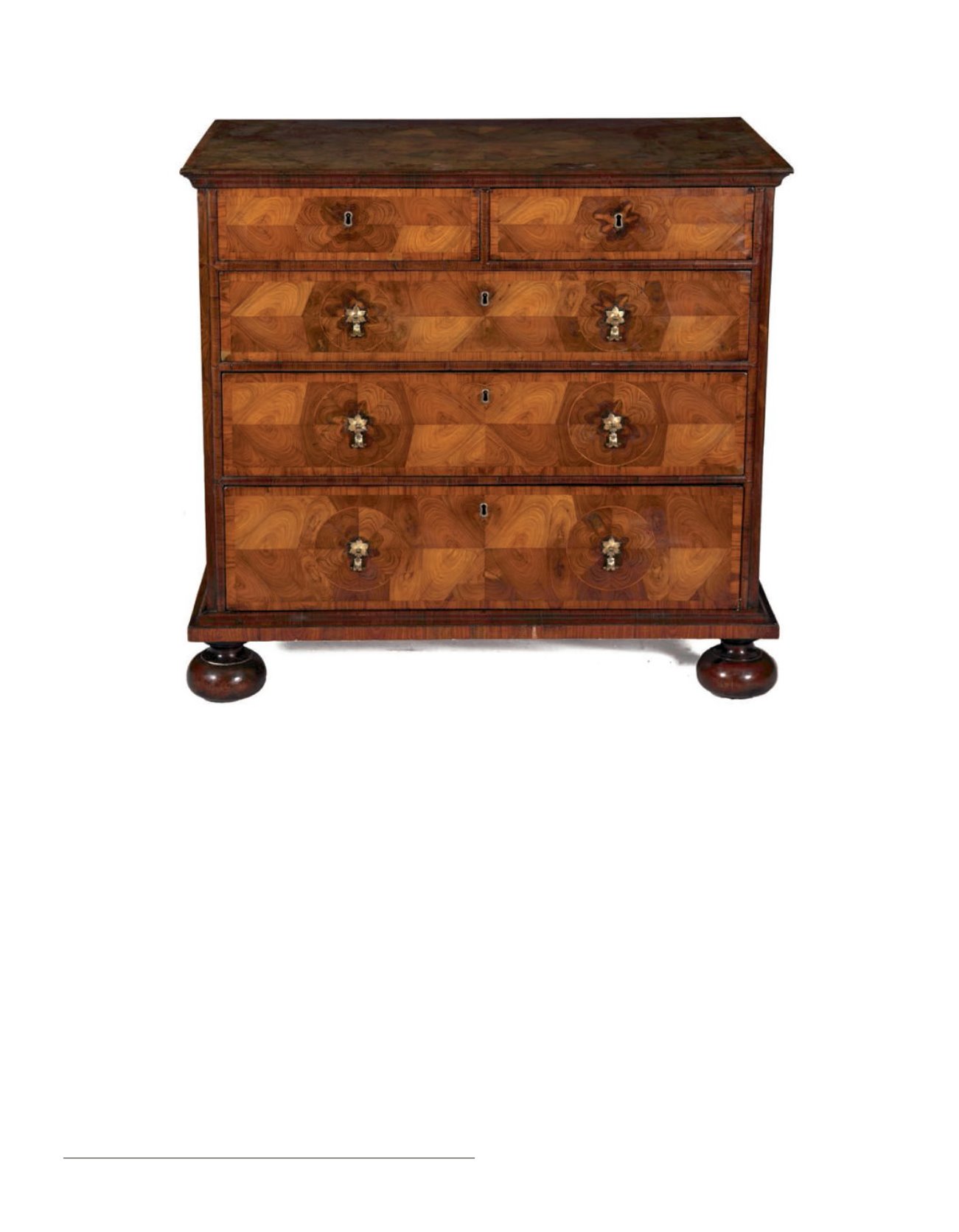
116 A FINE WILLIAM AND MARY OYSTER VENEERED OLIVE TULIPWOOD CHEST,comprising two short and three long graduated drawers with brass
drop handles, raised on bun feet. 96 x 58cm
€ 8,000 - 10,000
Oyster veneering is one of the most decorative and striking techniques developed by English cabinet-makers in the second half of the
17th Century. The process involves cutting thin slices of saplings transversely across the trunk to create a veneer or ‘oyster-piece’; the
name ‘oyster veneering’ is derived from the resemblance of each piece of veneer to an oyster shell. Once cut, the oyster-pieces are
laid side by side in the furniture creating a radiating pattern. Although the end result is beautiful, there is no doubt that this technique
posed many difficulties for cabinet makers - namely the exceedingly brittle nature of the oyster-pieces, their tendency not to adhere to
the bed in which they are being laid on the furniture as well as veneers that had been cut with the direction of the grain.
Walnut, laburnum and lignum-vitae were the most frequently used timbers in oyster veneering, however by the mid-17th century olive
wood was a highly sought after material and was being imported to Britain in large quantities, thus olive veneers are commonly found
on British furniture from c.1660 onward. This ‘oyster’ fashion made the best use of the small scantlings of the olive wood and the higher
contrast between light and dark wood maximising the visual impact of the veneer. Table tops and the tops and sides of case furniture
were frequently veneered with olive oysters in geometric arrangements as can be seen in the William and Mary chest in this sale.