



 77 / 326

Tuesday 11th October
77
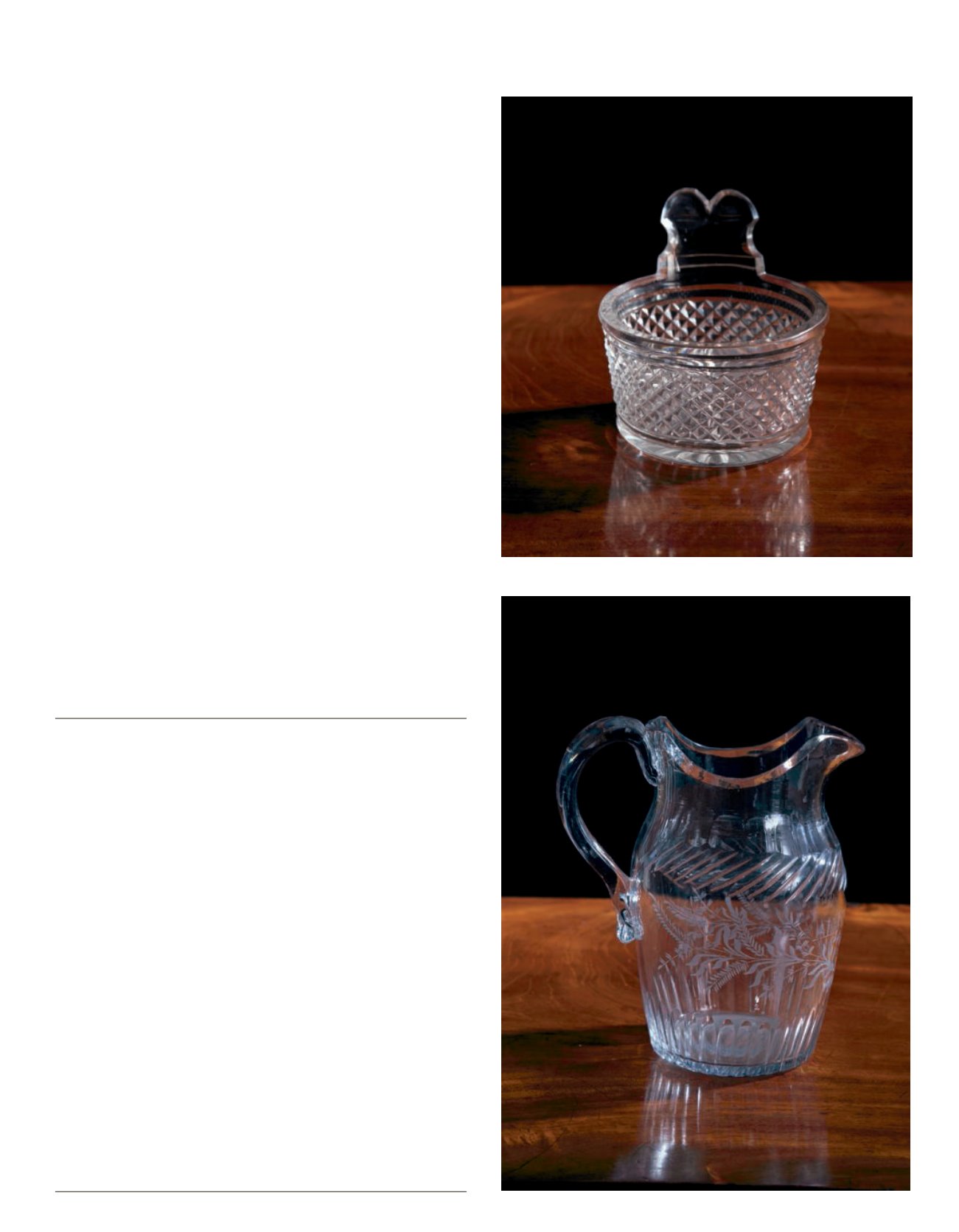
113 A 19TH CENTURY DIAMOND CUT GLASS PIGGIN,of circular form, with short stave handle and star-cut base. 13cm
wide over handle.
€ 80 - 100
114 A 19TH CENTURY CUT GLASS JUG,inscribed ‘Alice Cowell’, with pillar fluting. 19cm tall, 16.5cm over
handle and spout
€ 400 - 500
At the close of the 18th century, due the ability to export glass,
which was made possible by the excise duties placed on glass
produced in Great Britain, new glass-houses were set up in Cork,
Waterford, Belfast, Dublin and Newry. Before the 19th century it
was difficult to tell the difference between Irish and English glass
shapes and cuts as they employed very similar styles- on account
of the large number of English glass makers working in Ireland.
Equally glassmakers, similar to other crafts of the period were
following the lines of London fashion. However, with individual
objects it becomes easier to tell the differences and subtleties of
design.
With this present example of a glass piggin considerable changes
occurred in its style and function. It was not until end of 18th
century that piggins made from glass or silver were produced in
Ireland. Previous to this they had been formed out of wood and in
keeping with this earlier material some glass piggins from this pe-
riod were cut to simulate the staves and horizontal rings as to re-
semble the wooden pails. These wooden piggins were used mostly
in the more rural homes functioning as miniature pails. However,
their status gradually changed, moving from quaint cottage life to
the upper echelons of the 19th century ‘big house’ to be used for
more elegant purposes. The survival of glass piggins with serving
ladles they were used for serving at the table. Equally the rarity
of glass piggins seems to indicate that they were not a domestic
necessity but rather an object of design. Cut motifs decorated the
rim – as they were no longer used for drinking – similar to glass de-
canters or fruit bowls. The body of the piggin was formed from cut
pillar flutes, a pattern much favoured by the Waterford glassworks
in the 1820s while others were cut all over with prismatic rings or
sharp diamonds.