


 59 / 114

59
The History Sale
1920, and he oversaw the amalgamation of several small nationalist groups under the umbrella of ‘Cumann na nGaedheal’, later renamed Sinn Fein. He did not
fight in the 1916 Rising, though apparently he offered to do so, but he was arrested afterwards, and spent several periods in jail in England, notably in 1918-19, the
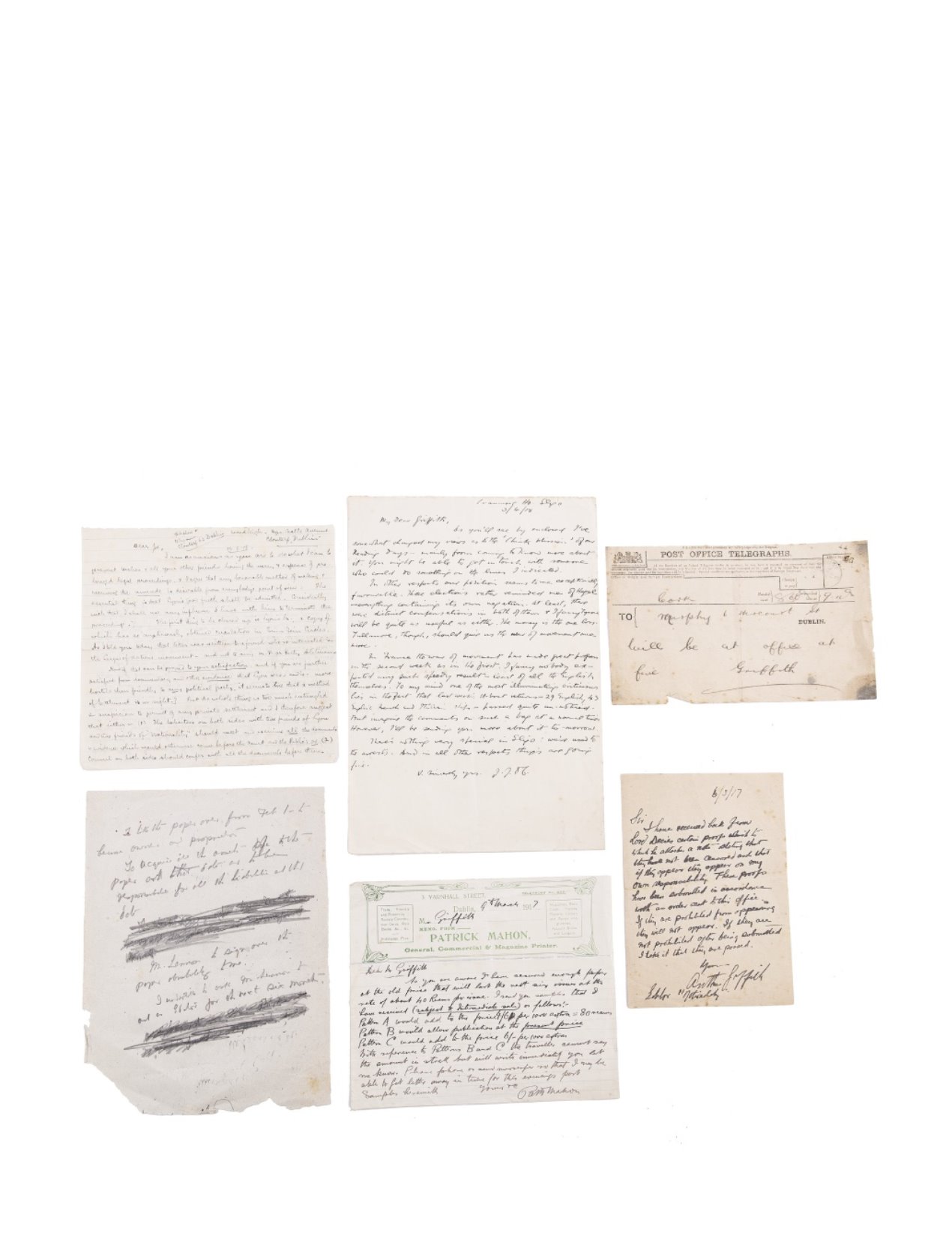
period covered by much of the present correspondence.
Elected to the First Dail, he was chosen as itsVice President and (in DeValera’s absence in America) was with Collins the effective head of the Republican Govern-
ment. He went to London with Collins and the other plenipotentiaries to negotiate a settlement with Lloyd George, and negotiated and signed the Anglo-Irish
Treaty. When theTreaty was ratified and DeValera withdrew, he became President of the Dail Government. After many years of privation and struggle, the strain
of the CivilWar eventually became too much for him, and on 12 August 1922 he died suddenly in Dublin.
Charles Murphy, a Dubliner who managed Griffith’s paper Nationality, served in Boland’s Mills during the 1916 Rising. He was later close to Eamon DeValera.
Seumas O’Kelly, who replaced Griffith as editor during his imprisonment, died suddenly of a heart attack after a British raid on the Nationality office in 1918.
A significant collection, which adds to our knowledge of a great man. In spite of Griffith’s prominence and importance, information about his business affairs is
scarce, and the present collection offers a useful addition to what is available.
€2,000/2,500