


 61 / 164

61
Silver from the Collection of Jimmy Weldon
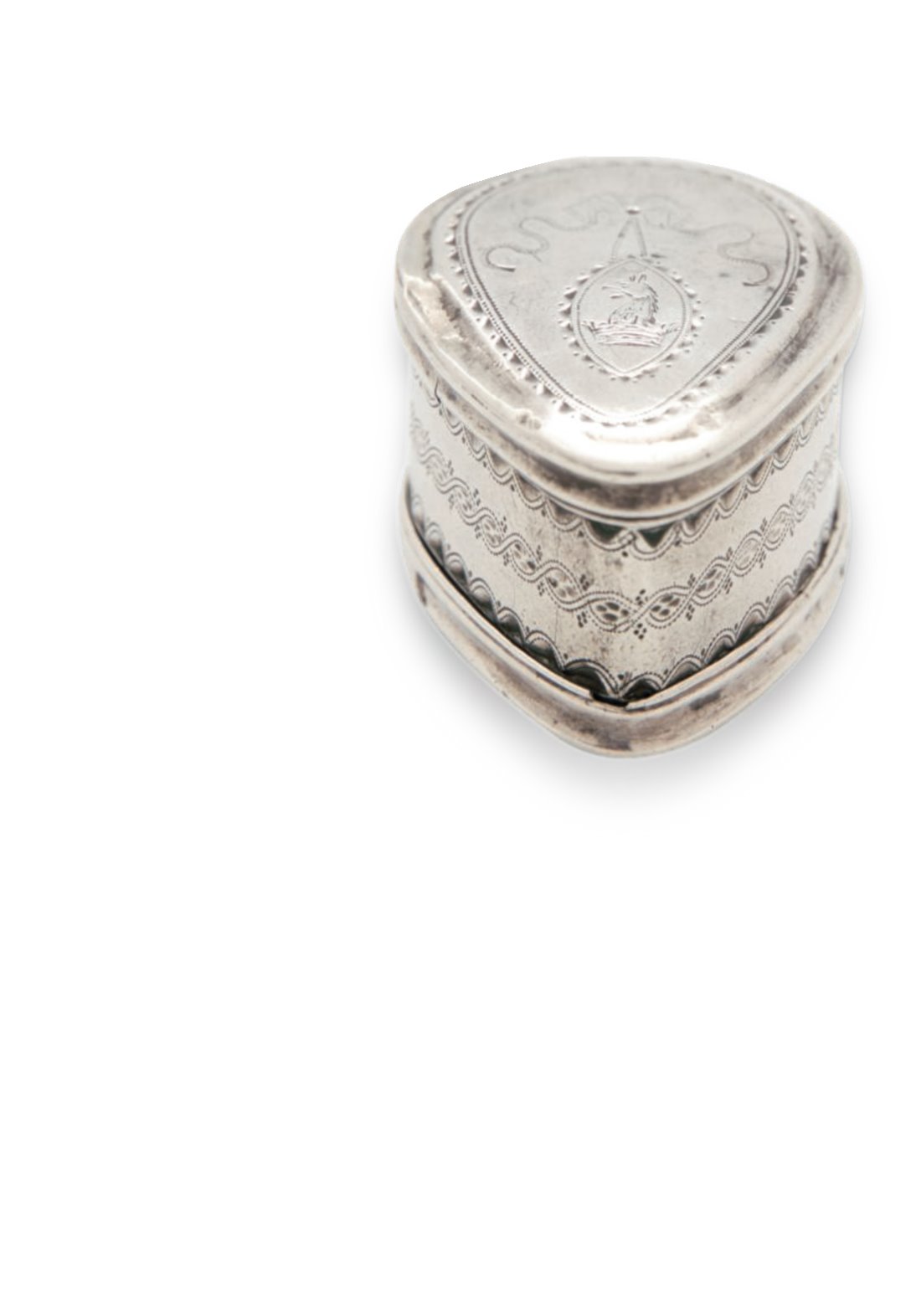
56 AN IRISH 18TH CENTURY BRIGHT CUT NUTMEG GRATER, DUBLIN,unrecorded mark believed to be that of Dorothy
Mountjoy, of pointed oval form, hinged lid to
either side, one crested the other engraved with
initials “MW”, with all over bright cut decora-
tion, (c.41.7g). 4.5cm long
€ 1,000 - 2,000
Nutmeg, a spice which now unobtrusively
adorns most homes, was once the centre of a
bitter power struggle and a commodity that por-
trayed its bearer as a member of nobility.
The seed was originally brought to Europe in the me-
dieval times by the Arabs via theVenetians, and the secret
to its origin was possessively sought.At the time, Myristica
fragrans (the nutmeg tree) grew only on the Banda Islands in
Indonesia and thus it wasn’t until the 17th century when the Dutch
East IndiaTrading Company, the then richest corporation in the world,
discovered the source.The Dutch seized the islands, and with them the growth
and distribution of nutmeg, monopolising the trade with a savage tyranny.The export
of all trees was banned, with the death penalty being placed on those foolhardy enough to attempt to steal or grow
nutmeg elsewhere. In their paranoia, the Dutch slaughtered the inhabitants of the Bandas, the population falling from
c.1500 to just 600 after fifteen years.The absolute control of the spice allowed it to be sold at exorbitant prices across
Europe, developing it into a luxury product reserved only for those of the upper class.
In addition to this, nutmeg’s popularity flourished on account of its supposed medicinal traits.The mysterious seed
was thought to cure most ailments from rheumatism to stomach complaints, making the carrying of the spice not
only fashionable but general good sense…. By carrying one’s own nutmeg grater, an ostentatious flourish of the
spice over food or wine could cement your good standing in society – and allegedly purify the breath after a night of
indulgence.
With a break in Dutch power, the British laid claim to the Bandas and began to grow nutmeg across their colonies, an
increase in supply and better knowledge of modern medicine leading to the banishing of nutmeg to the status that it
now holds, a spice seldom remembered at the back of a drawer.