


 32 / 164

32
T
uesday
16
th
M
ay
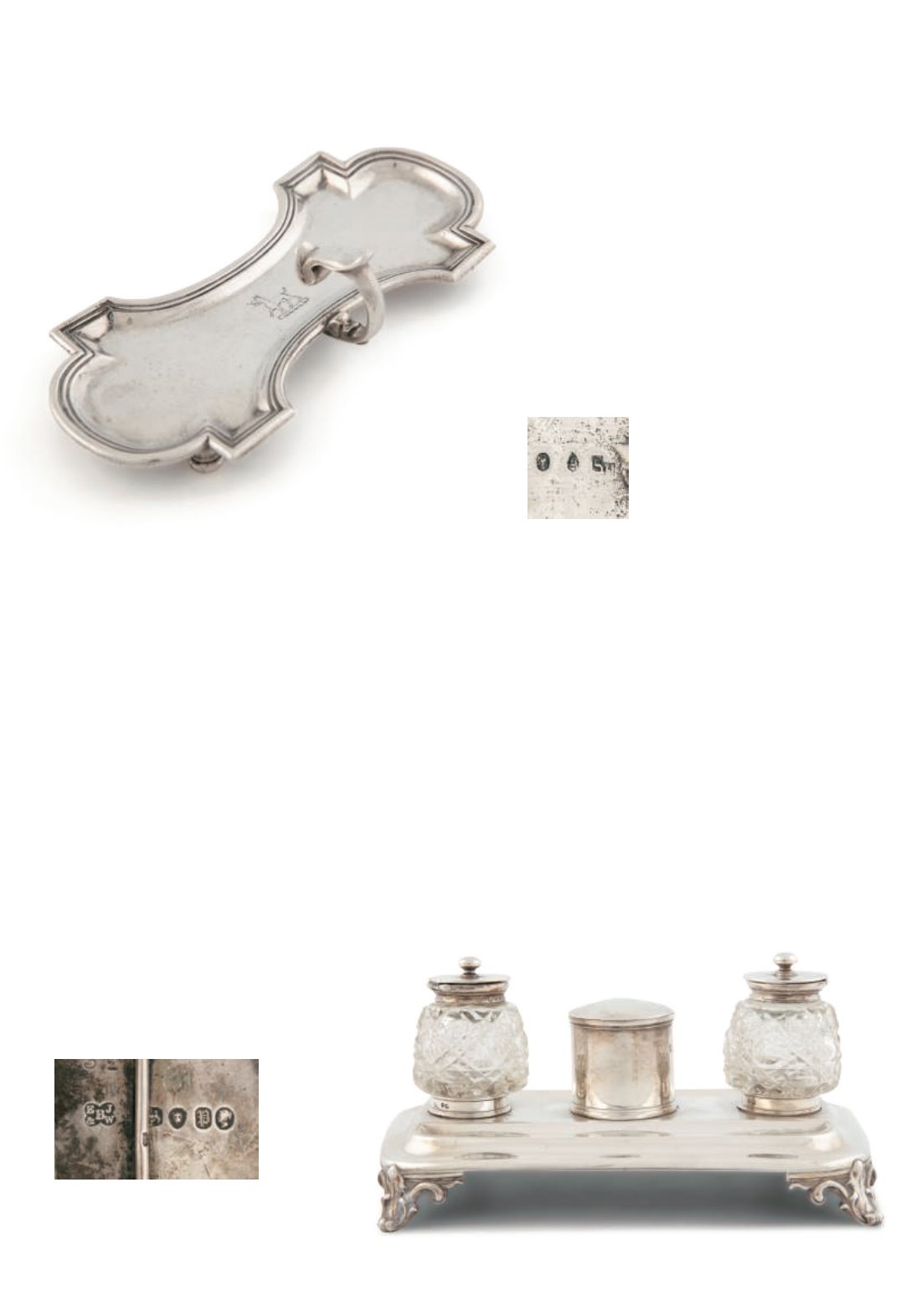
24 AN IRISH GEORGE II SNUFFER TRAY, DUBLIN C.1736,mark probably that ofThomas Sutton, of shaped hour-glass
form, with raised reeded rim, and applied‘c’ scroll handle,
crested, and raised on four circular feet, (c.233g). 18cm
wide
€ 1,000 - 1,500
1736:Lionel Sackville,1st Duke of Dorset,Lord Lieutenant of
Ireland,lays the foundation stone for an obelisk commemorating the
Battle of the Boyne (1690) at Oldbridge,Co.Meath.
25 A VICTORIAN PLAIN SILVER INK STAND, LONDON 1850,mark of Eames & Barnard, of rectangular form, with one
plain cylindrical inkwell flanked by two facet cut glass
bottles with silver caps, raised on four scroll feet, (c.233g
not including glass bottles). 10 x 18cm
€ 300 - 500
1850:Tara Brooch (c.700 AD) found near Laytown,County
Meath.
‘Snuffers’ were commonly used throughout the eighteenth and nineteenth centuries as a means to gently extinguish the flame of candles without
spilling the wax.As a further mechanism to protect the furnishings of the home, trays were designed on which to rest the snuffer when not in use.
If we consider the long handle and domed or square end of a snuffer, it is easy to understand the design of this unusual shaped tray.