



 148 / 326

148
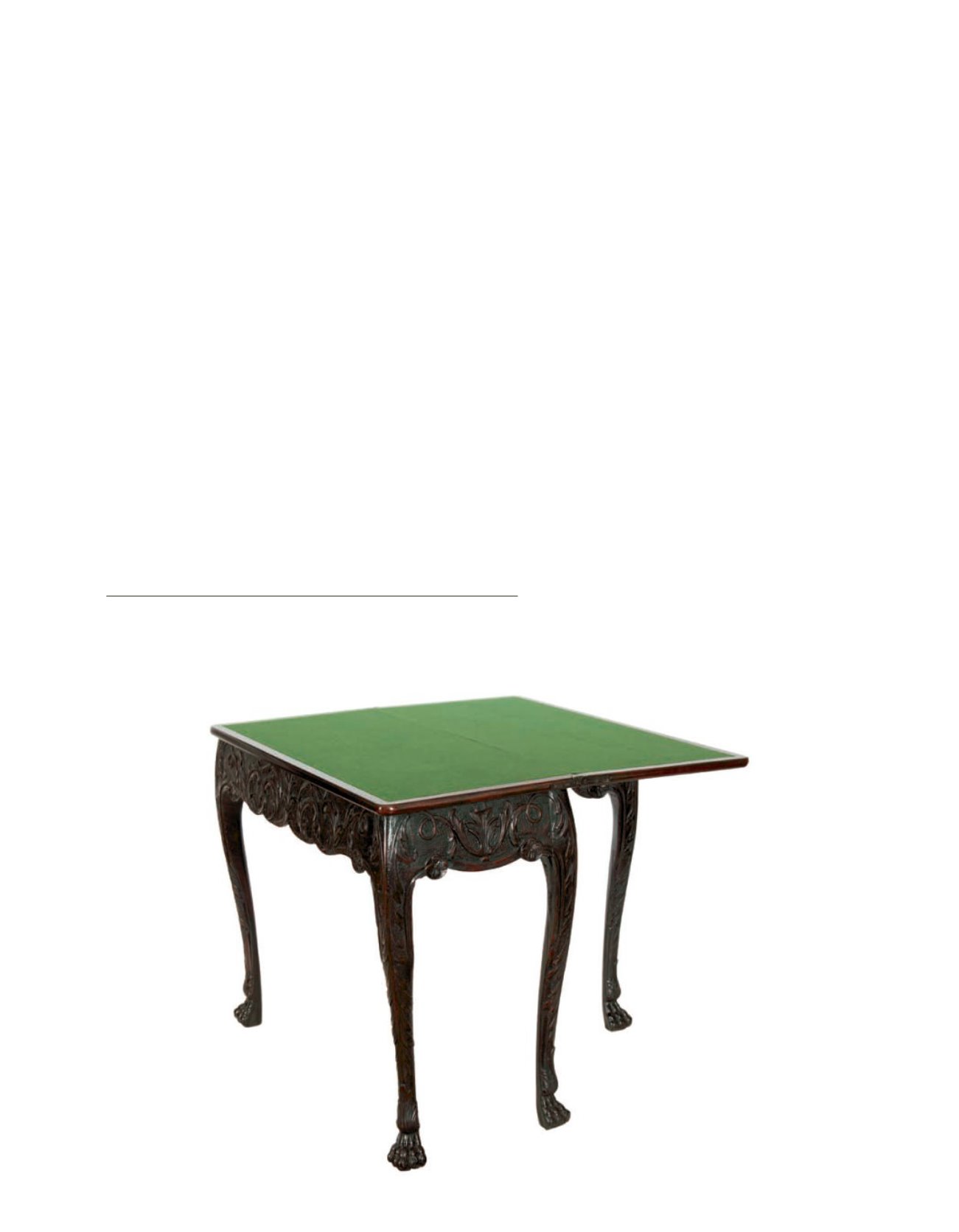
230 A FINE IRISH GEORGE III MAHOGANY RECTANGULAR FOLDING TOP CARD TABLE,the interior baize lined, the deep frieze carved with opposing scrolls, leafwork and rosette terminals etc. on a punched ground,
each leg with acanthus bands extending fully down each leg, the carved paw feet with prominent carved fetlocks. 87cm wide,
40cm deep, 73cm high
An identical table is illustrated in
Irish Furniture
by The Knight of Glin and James Peill, Page 237, plate 136.
This card table, with gracefully shaped apron centred by a scallop shell, the badge of Venus, goddess of love, is a superb ex-
ample of mid-18th century Irish craftsmanship. The ground of the apron is pounced like contemporary gilt-gessowork and the
Bacchic lion paw feet are squared in the Irish manner below carved fetlocks, another Irish characteristic.
Like many Irish tables of the same period, it bears no frieze and the top sits directly on the apron, such as a similar card table
in the National Museum of Ireland, Collins Barracks, Dublin (no. 1911.532). There is a side table with a very similar apron and
probably by the same cabinet-maker in the Fogg Art Museum, Harvard University, U.S.A.
An inventory of Lawrence Delamain’s house in Cork, taken in 1763, lists in the front parlour, a mahogany dining table, a
marble table, a card table, chairs with leather seats and brass fittings for wall lights to impress his clientele as he was a teacher
of dancing.
(Toby Barnard,
Making the Grand Figure, Lives and Possessions in Ireland
, 1641.-1770, 2004, p. 112).
€ 20,000 - 30,000