


 12 / 164

T
uesday
16
th
M
ay
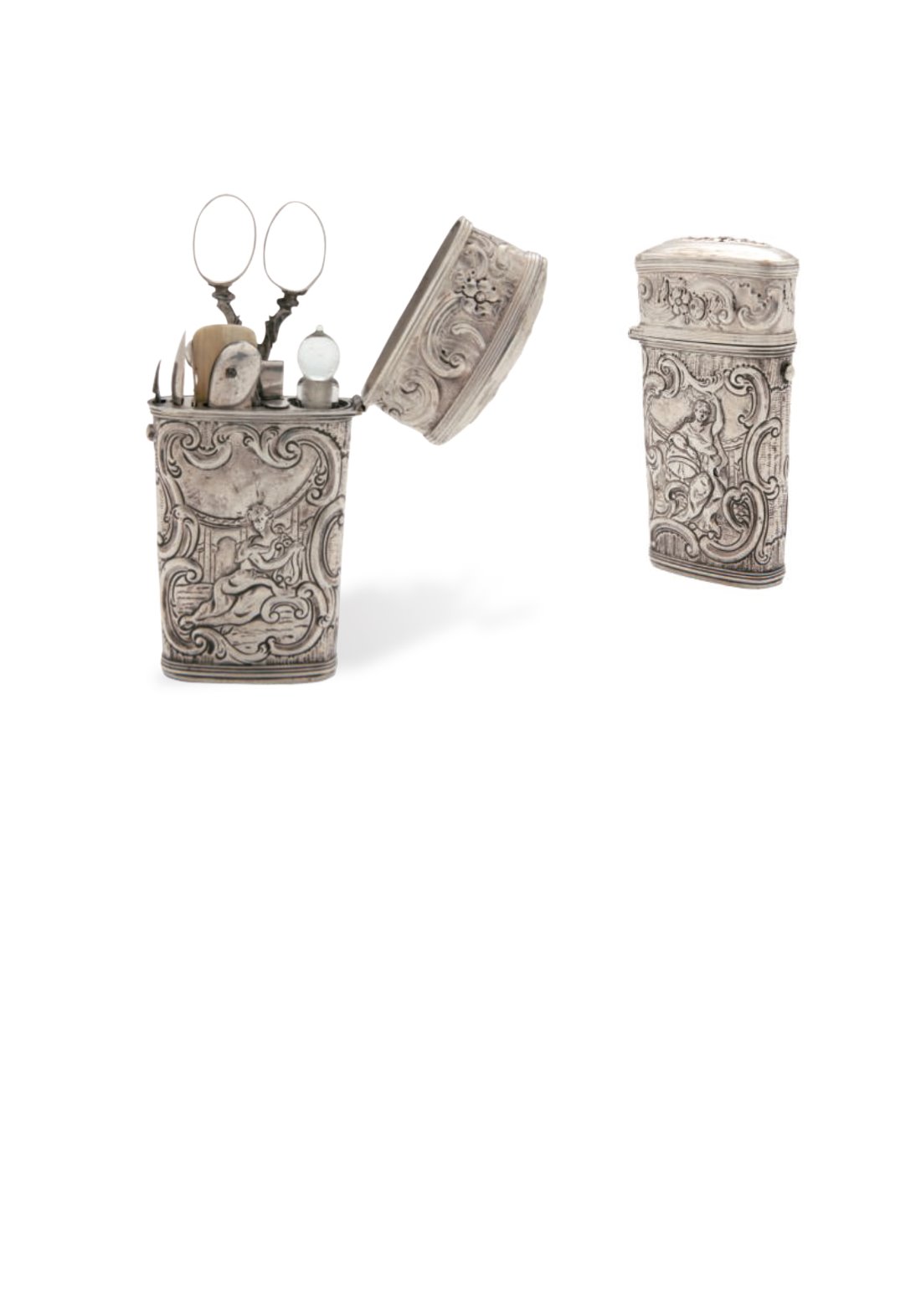
2 A CONTINENTAL WHITE METAL FITTED ÉTUI, 18TH CENTURY,of slim rectangular form with domed hinged lid opening to reveal fitted toilet utensils, scissors, scent bottle, collar stiffeners,
etc., the exterior all over chased and embossed with scenes of fashionable ladies amidst scrolling foliate decoration.
8.5 x 4.5 x 1.5cm
€ 500 - 800
An étui is an ornamental case, commonly used for holding personal accessories, such as scent bottles, scissors, tweezers etc.The
word can be translated directly from the French to indicate a case or container and originates from the old French word estuier
which means to keep or hold.These accessories came to prominence in the 18th century and were spread throughout Europe –
so why is it that we use the French term?
At this time, France was one of the strongest powers in Europe and, as such, the European upper classes were all proficient
in French. Indeed, French was used as a common language when travelling around the continent, a practice made so popular
during the great‘GrandTour’ days. Furthermore, France was seen as the height of fashionable living.As the end of the 17th cen-
tury brought an increase in industrial power, the French middle class became progressively wealthier, ushering in the age of the
Bourgeoisie and a materialistic, consumer driven society.The desire for this lifestyle spread, a high demand for French fashion
and goods leading to the export of such items. In an effort to appear as contemporary as their neighbours, the English speaking
countries adopted not only French dress, but language as well, remnants of which remain today.