


 100 / 164

100
T
uesday
16
th
M
ay
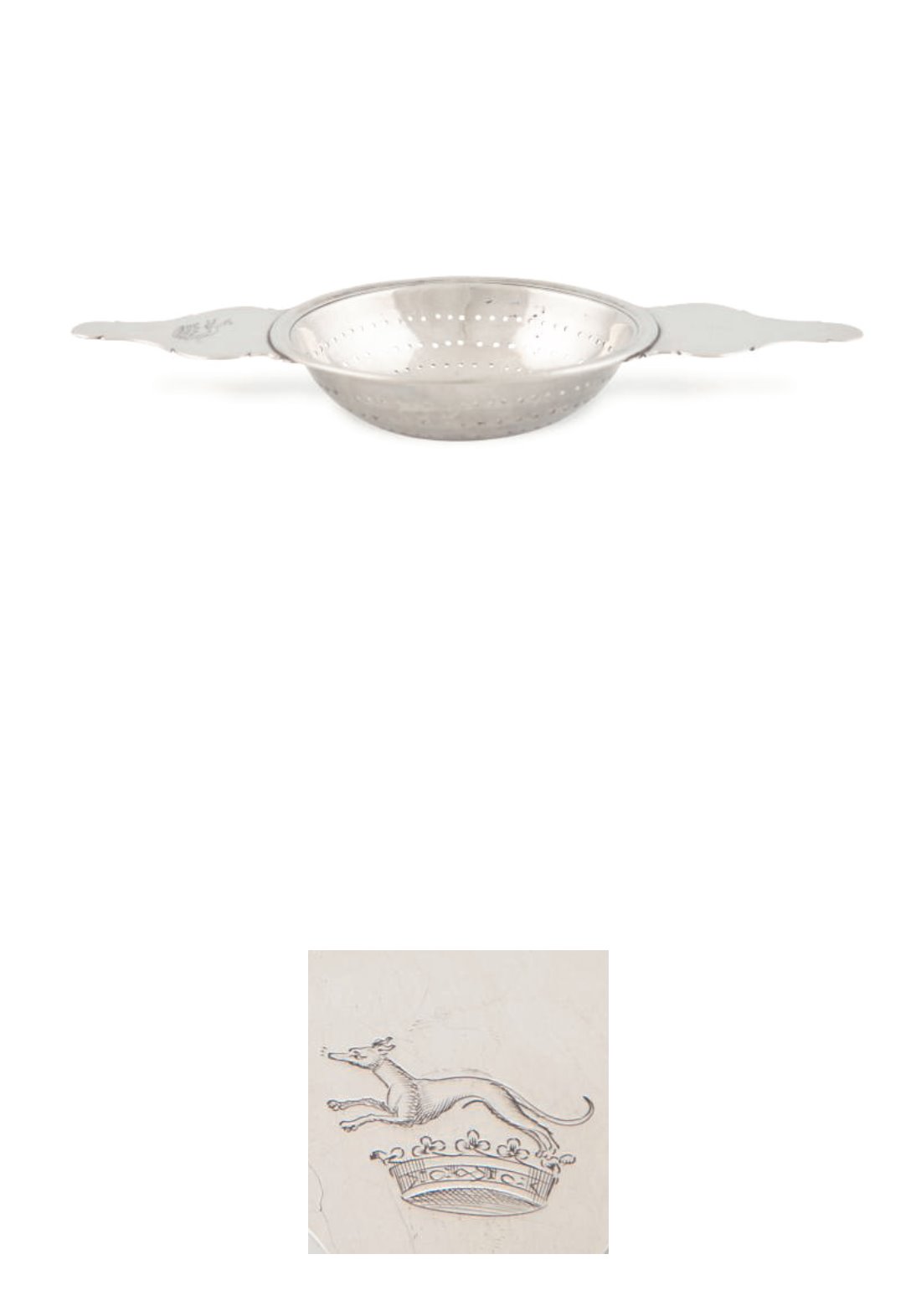
104 A FINE IRISH GEORGE II LEMON STRAINER, DUBLIN C.1745,mark ofWilliamTownsend, the circular bowl centred with pierced foliate decoration and flange handles, each engraved with crest, (c.171g).
24.5cm wide over side handles, the bowl 11.5cm diameter
€ 1,600 - 1,800
In “Small Antique Silverware”, (Hughes, 1957 pp198-199), the author describes the importance of punch-making in the eighteenth century
as a social accomplishment and an art form with which to entertain one’s guests. During the first half of the eighteenth century, freshly
squeezed lemon juice was an essential element of punch. Hughes writes “This was the recipe used by the directors of the East India Compa-
ny who regaled themselves with punch at their meetings, spending five shillings on lemons”.The lemon strainers were designed to rest on
the edge of the punch bowl, accounting for their size and flange handles, as well as their careful decoration and numerous rows of circular
piercing. By the 1750s, orange juice became fashionable and replaced the “zestful” lemon; and by the 1770s, the introduction of toddy led
to a decline in the production of lemon and orange strainers.
1745:The Jacobite Rising of 1745 occurs.Bonnie Prince Charlie raises his standard at Glenfinnan,Scotland igniting the second Jacobite rebellion.