


 28 / 310

28
PROPERTY OF THE 9
th
VISCOUNT GORT
In August 1798 French General Joseph Humbert led an invasion of Ireland where he joined forces with Irish reb-
els in an attempt to overthrow the British. With an army of about 3,000 strong, the French and United Irishmen
defeated the British at Castlebar, but as they advanced towards Sligo, on 5th September 1798, their front line was
turned by Colonel Charles Vereker and three hundred of the Limerick City Militia. Vereker, by a fool-hardy advance
to Collooney and various rouses had tricked Humbert into thinking that he was the vanguard of a superior force.
Although Colonel Vereker was criticized by some for the way in which he conducted the battle, in particular the
loss of his artillery and for his decision to evacuate the militia to Ballyshannon soon after the battle and in doing
so leaving Sligo defenceless, this did not detract from the high esteem in which Limerick and other parts of the
Country held Colonel Vereker and the Limerick Militia. The Battle at Collooney was seen as a great victory over
the French. Given the reputation of the French Arms and the widespread panic their success in Mayo had caused,
Colonel Vereker’s stand at Collooney extinguished the serious threat felt by the British in Ireland. Vereker and the
Militia were therefore welcomed back to Limerick with great pride and hailed as heroes.
The Freeman’s Journal of 24 August 1799 reported: “The Corporation and Citizens of Limerick have subscribed for
very elegant Gold and Silver medals to be presented to the City of Limerick Militia for their bravery and valorous
conduct at Collooney in resisting the French army under General Humbert, who some time ago invaded this king-
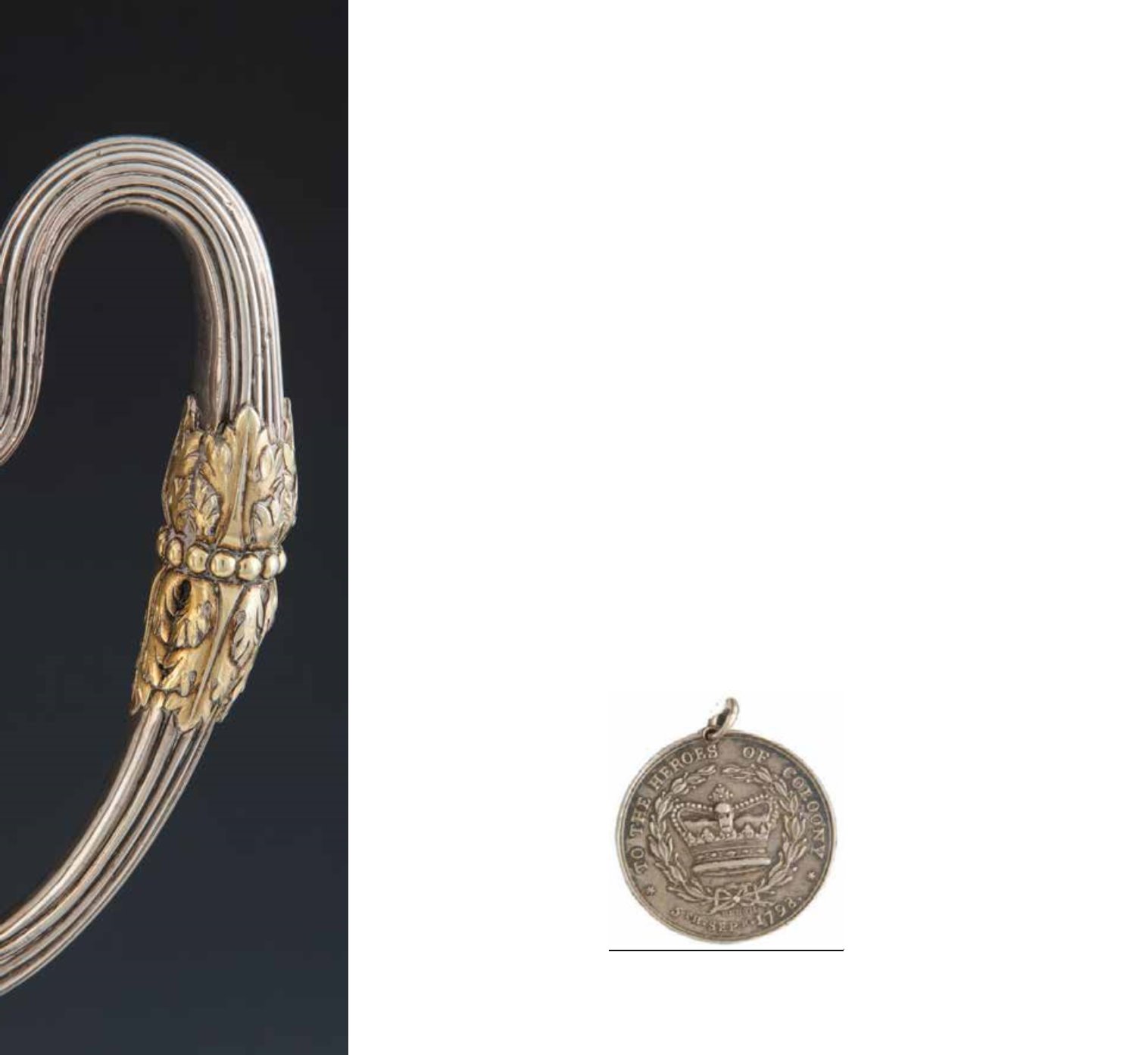
dom…” Each medal is inscribed “To the Heroes of Colooney 5th Sepr 1798”. The only known examples of these
medals are silver, one of which was sold in these rooms 17/04/2007.
Vereker afterwards inherited the title as 2nd Viscount Gort by special remainder on the death of his maternal uncle
John Prendergast Smyth. He opposed the Union stating “I have defended my country with my blood, and there
is nothing in the gift of the Crown that would tempt me to betray her by my vote.” The family built Lough Cutra
Castle to the designs of John Nash. In the 20th Century they produced the warrior Viscount, a V.C. who salvaged
the British Expeditionary Force by redirecting to Dunkirk – not the easiest part of which was dealing with Churchill
who after the extraordinary extraction of an entire army, claimed the credit. The V.C.’s son is remembered more
for his generous and scholarly restoration and furnishing of Bunratty Castle.