



 182 / 310

182
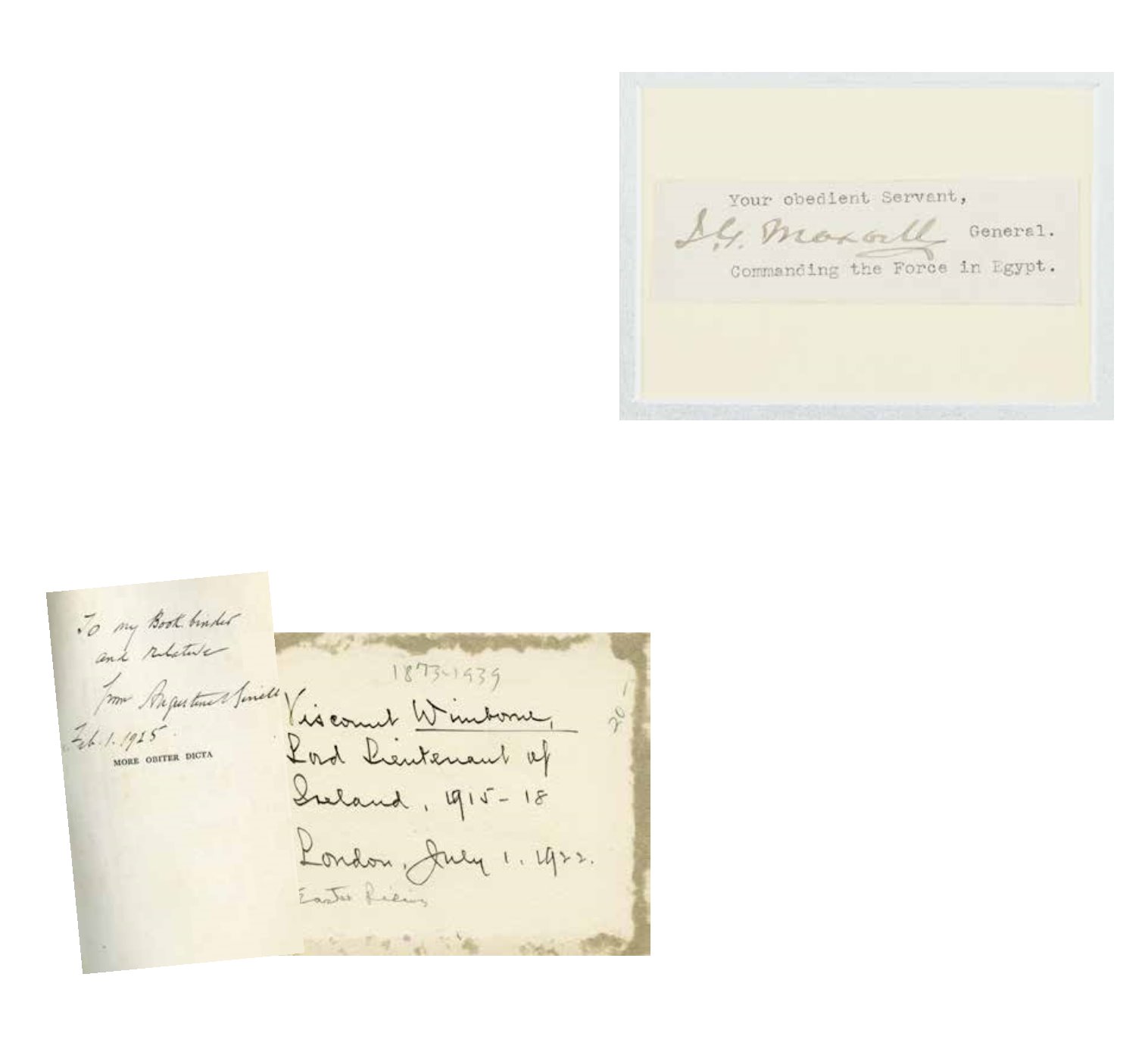
228 THE MAN SENT TO PUT DOWN THE REBELLIONA clipping with General John Grenfell Maxwell’s rare signature mounted with sepia portrait print, 35.5 x
28cm in all. Most remembered for the execution of the leaders of the 1916 Easter Rising, earning him the
nickname “Bloody Maxwell”.
General Maxwell had a long military career, serving in Egypt and South Africa (in the Boer War). He served
at army headquarters at the Royal Hospital, Kilmainham, Dublin from 1902 to 1904. He became General Of-
ficer Commanding British Troops in Egypt in 1908 and was then deployed on the Western Front in the First
World War until he returned to his role as General Officer Commanding British Troops in Egypt in late 1914.
€ 200 - 300
229 BIRRELL & WIMBORNEBirrell (Augustine), More Obiter Dicta, London, 1924, signed and inscribed by the author,
tan cloth boards.
Together with:
Ivor Churchill Guest, Lord Wimborne’s signature, on card, 9 x 11cm
(2)
Augustine Birrell was Chief Secretary for Ireland at the time of the Rising. He was criticised
for his inability to predict or prevent the rebellion, and resigned office shortly after.
Known at the time as an author and essayist, this collection of his work is dedicated and
signed by him, dated 1925. Although he gained some pity for having to resign, one com-
mentator said:
“I cannot for the life of me see what claims Birrell has to sympathy. The dead and wounded
and the very stones of Dublin cry out against him.”
Lord Wimborne was one of the last Lords Lieutenant of Ireland, serving in that position at
the time of the Easter Rising. When the German arms ship Aud was scuttled and Sir Roger
Casement had been arrested, Wimborne urged the Under-Secretary for Ireland, Matthew
Nathan, to order the arrest of a large number of rebel leaders. Nathan was unwilling to do
so without the authorisation of the Chief Secretary, Augustine Birrell, who was in London.
Birrell’s absence at that time was one of the factors that ensured his resignation after the
Rising. Wimborne’s position survived the fallout from the rebellion.
€ 100 - 200