



 118 / 310

118
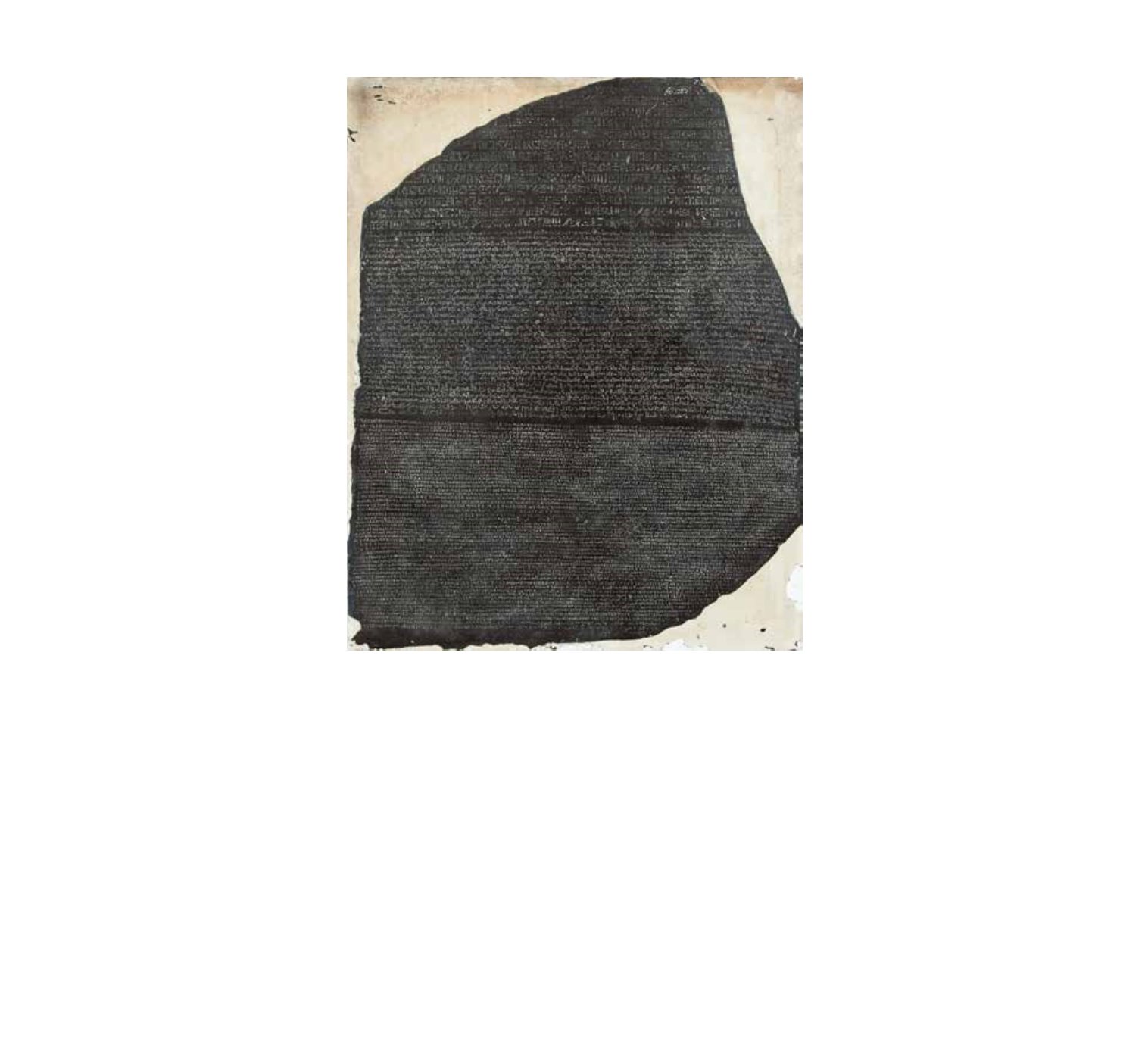
142 A 19TH CENTURY REPLICA OF THE ROSETTA STONE,presented on a rectangular steel slab, with loose brass plaque inscribed:
‘ROSETTA STONE
FOUND IN EGYPT AT ROSETTA (RASHID) IN 1799 BY FRENCH ENGINEER NAMED BOUSSARD THE WRITINGS, IN TRIPLE HIEROGLYPHIC, DEMOTIC AND GREEK
SING THE PRAISES OF THE BOY KING PTOLEMY V (CIRCA 196BC) AND PROVIDED A KEY TO ARCHAEOLOGIST FOR DECIPHERING THE HIEROGLYPHICS ON ALL
MONUMENTS OF ANCIENT EGYPT.’
75 x 95cm
Provenance: Purchased by the current owner from Queen’s University, Belfast, where it was used as a teaching aid.
As outlined in the inscribed plaque The Rosetta Stone (c.196 BC) was discovered in 1799 by a group of Napoleon’s soldiers who were digging the foundations
of an extention to a fort near the town of el-Rashid (Rosetta). After the defeat of Napoleon, the stone along with other antiquities discovered by the French
became the property of the British. The Rosetta Stone has been exhibited in the British Museum since 1802.
At the end of the fourth century AD, hieroglyphs went out of use, and so the knowledge of how to read and write them was lost.
The importance of the discovery of the Rosetta Stone is tremendous as it was the key to unlocking the mystery of ancient Egyptian hieroglyphs. In the early
years of the nineteenth century, some 1400 years later, scholars were able to use the Greek inscription on this stone as the key to decipher these hieroglyphs
€ 800 - 1200