


 92 / 100

92
Tuesday 18th October
167 A RUBY AND DIAMOND RINGThe oval-shaped ruby
weighing approximately 2.20cts
, between two old brilliant-cut diamond
shoulders,
diamonds approximately 1.25cts each,ring size R½
€ 7,500 - 9,500
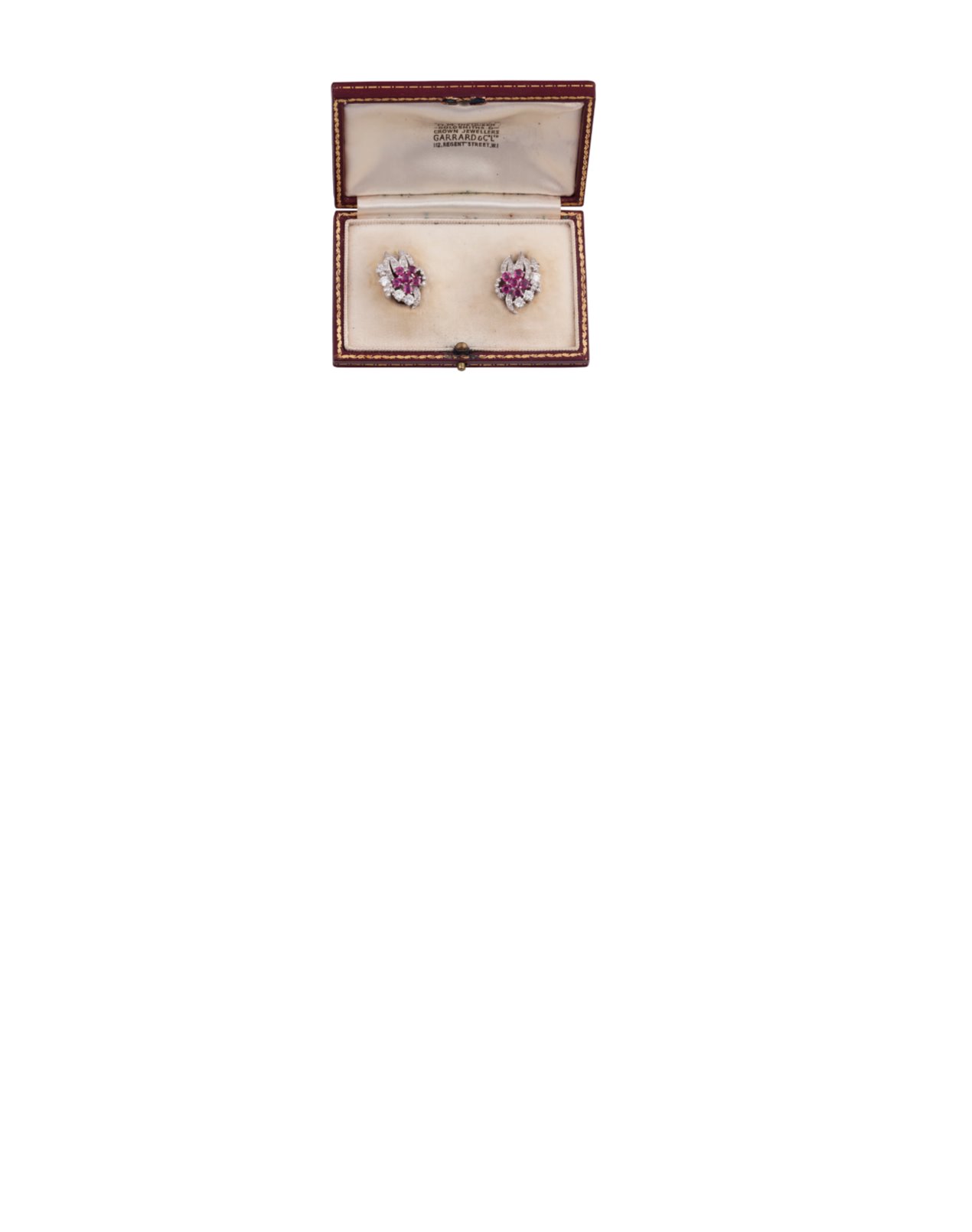
168 A PAIR OF RUBY AND DIAMOND EARCLIPS, CIRCA 1950Of stylised foliate design, each set to the centre with six circular-cut rubies, within brilliant-cut
diamond leaves and buds,
diamonds approximately 1.70cts total, length 2.4cm,fitted case by Garrard &
Co.Ltd,112 Regent StreetW1
€ 2,000 - 3,000
It is very probable that humans discovered rubies about 3000 BC.The famous Mogok mining
area of Burma (now the union of Myanmar) has been so heavily mined for so many thousands of
years that evidence is rare.According to the thirteenth-century medical literature from India,
rubies were believed to cure digestive disorders.Warriors from Burma inserted rubies under
their skin so they would not be wounded in battle. People once believed they could ensure a
peaceful life.Wearing ruby, they thought, could bring health, wealth, wisdom and love. People
believed that if you wore a ruby in a ring on the left hand or in a brooch on the left side, it
would give you a magical ability to live in peace among your enemies.
The name Burma is practically synonymous with fine-quality ruby. Political changes led to the
renaming of the country as Myanmar, but many people to this date still refer to Burma when
they talk about the source of the world’s most prized rubies.The first Burmese mines were
located in Mogok, and production fluctuated through much of the post-WorldWar II era.The
discovery of a rich deposit in Mong Hsu helped the country get back to the forefront of ruby
producers. Still, not all rubies from other places are inferior.The quality of rubies fromThai-
land, Cambodia, andVietnam sometimes rivals Myanmar’s output.