


 43 / 100

43
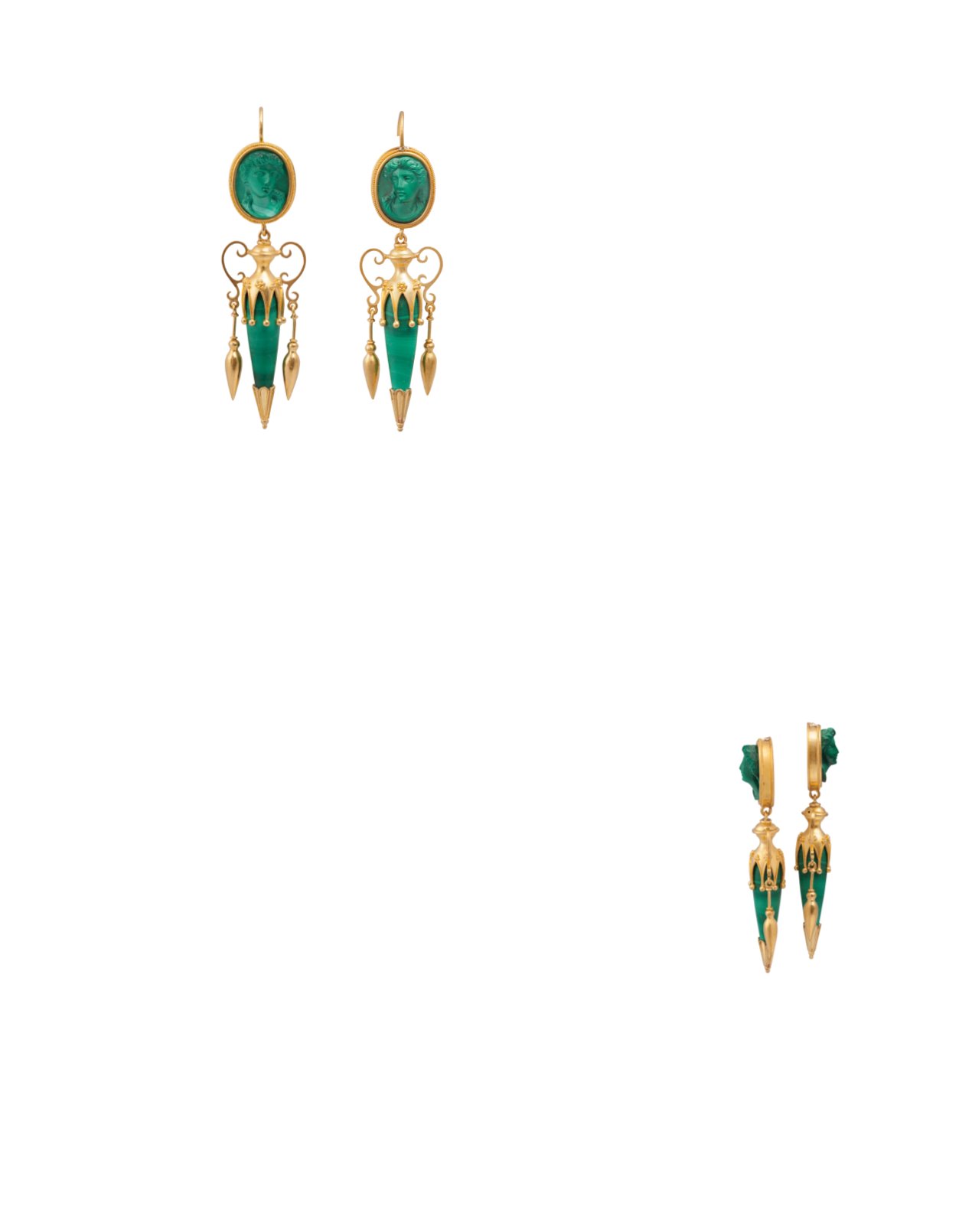
69 A PAIR OF 19TH CENTURY GOLD AND MALACHITE PENDENT EARRINGS, CIRCA 1860Of Etruscan revival design, each articulated earring formed as an oval malachite cameo depicting
the face ofVenus, suspending a gold and malachite amphora, with applied beading detail,
mounted in
gold, French assay mark, length 6.8cm
€ 2,800 - 3,800
In the early 1800s archaeologists excavated Etruscan tombs outside Rome, unearthing many trea-
sures that had been buried including jewellery.The most beautiful examples were intricately wrought
gold earrings and necklaces bearing rows of pendants in the form of various mythological creatures
such as harpies, mermaids and gorgons. Jewellery with such fine gold work had not been seen since
the burials themselves many centuries ago.
The discovery of these ancient designs sparked inspiration in goldsmiths and jewellers of the 19th
Century and by the middle of the century the Etruscan style was prominent in revival jewellery,
joining the Egyptian and Renaissance revival designs. The 19th Century Italian jeweller Fortunato
Pio Castellani specialised in the recreation of ancient jewellery and he produced many replicas of
Etruscan jewellery using ancient techniques.With jewellers such as Castellani emulating this style, it
quickly spread throughout Europe and was used to produce elaborate jewellery that was so coveted
byVictorian high class society.
The spread of ancient civilisation jewellery was accelerated by the mass production of the industrial
age, even reaching across theAtlantic to the shores ofAmerica.TheAmerican CivilWar had widowed
many woman and orphaned many children thus makingVictorian England mourning jewellery par-
ticularly appealing.A typical motif seen adorned on mourning lockets was a classical urn in Etruscan
style with a lock of the deceased loved one’s hair against a grieving heart.
and popular designs included the amphora, a vessel for holding wine which lent itself perfect to drops
on a pair of earrings
Side views without
fittings