


 72 / 272

70
Unconditional surrender
Diarmaid Ferriter, June 2016
Historians have rightly made much of the importance of the First World War in relation to the staging of the Easter Rising in 1916. In-
ternational conflict had a profound impact on those who became central leaders in the rebellion, including Patrick Pearse. He viewed
the war as providing an opportunity for Irish republicans to organize, in a more serious manner, for rebellion but also to become
preoccupied with the notion of blood sacrifice and the idea that the war presented an opportunity for redemption: “It is good for the
world that such things should be done. The old heart of the earth needed to be warmed with the red wine of the battlefields. Such
august homage was never offered to God as this, the homage of lives given gladly for love of country”.
What that meant in practice, however, was brought home to Pearse by the end of Easter Week 1916. As noted by historian Joe Lee,
“After he had hesitated about surrendering initially, the sight of the shedding of innocent blood seems to have revolted Pearse as
much as the rhetoric of blood had excited him”. During the Rising, though the looting appalled him, he had refused to follow his own
injunction to shoot captured looters. Now, from the rebel’s last headquarters in Moore Street, seeing three civilians with a white flag
shot down, Pearse surrendered, in the hope of saving civilians and his followers, on the afternoon of Saturday, 29 April.
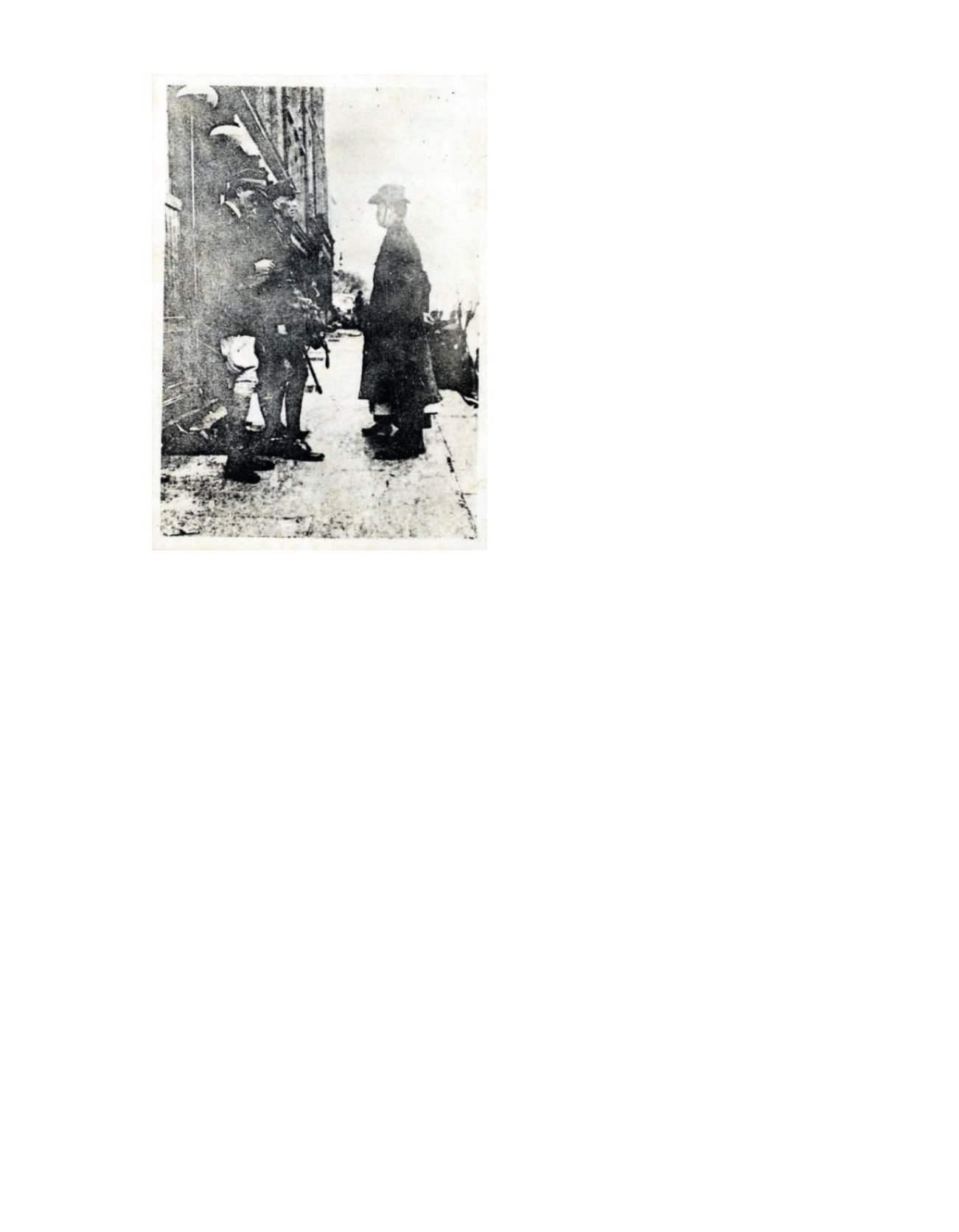
There was nothing ambiguous about Pearse’s response to the demand of Brigadier-General William Lowe, who had commanded Brit-
ish military operations throughout most of the week, that the rebels “surrender unconditionally”. While the Provisional Government of
the Republic had hoped to negotiate terms, Pearse, after his surrender to Lowe, was in no position to negotiate anything. Following
a brief meeting with British commander in chief General John Maxwell at the British army headquarters in Parkgate Street, a quickly
typed order to his subordinates was composed:
“
In order to prevent the further slaughter of Dublin citizens, and in the hope of saving the lives of our followers now surrounded and
hopelessly outnumbered, the members of the Provisional Government present at Headquarters have agreed to an unconditional surren-
der, and the commandants of the various districts in the city and country will order their commands to lay down arms”.
Pearse signed it, and on the same page underneath this order was a handwritten note by James Connolly:
“I agree to these conditions for the men only under my own command in the Moore Street District and for the men in the Stephen’s
Green Command.”
PADRAIG PEARSE, SURRENDERING TO GENERAL LOWE
Reproduced by the kind permission of the National Library, Dublin