



 122 / 272

120
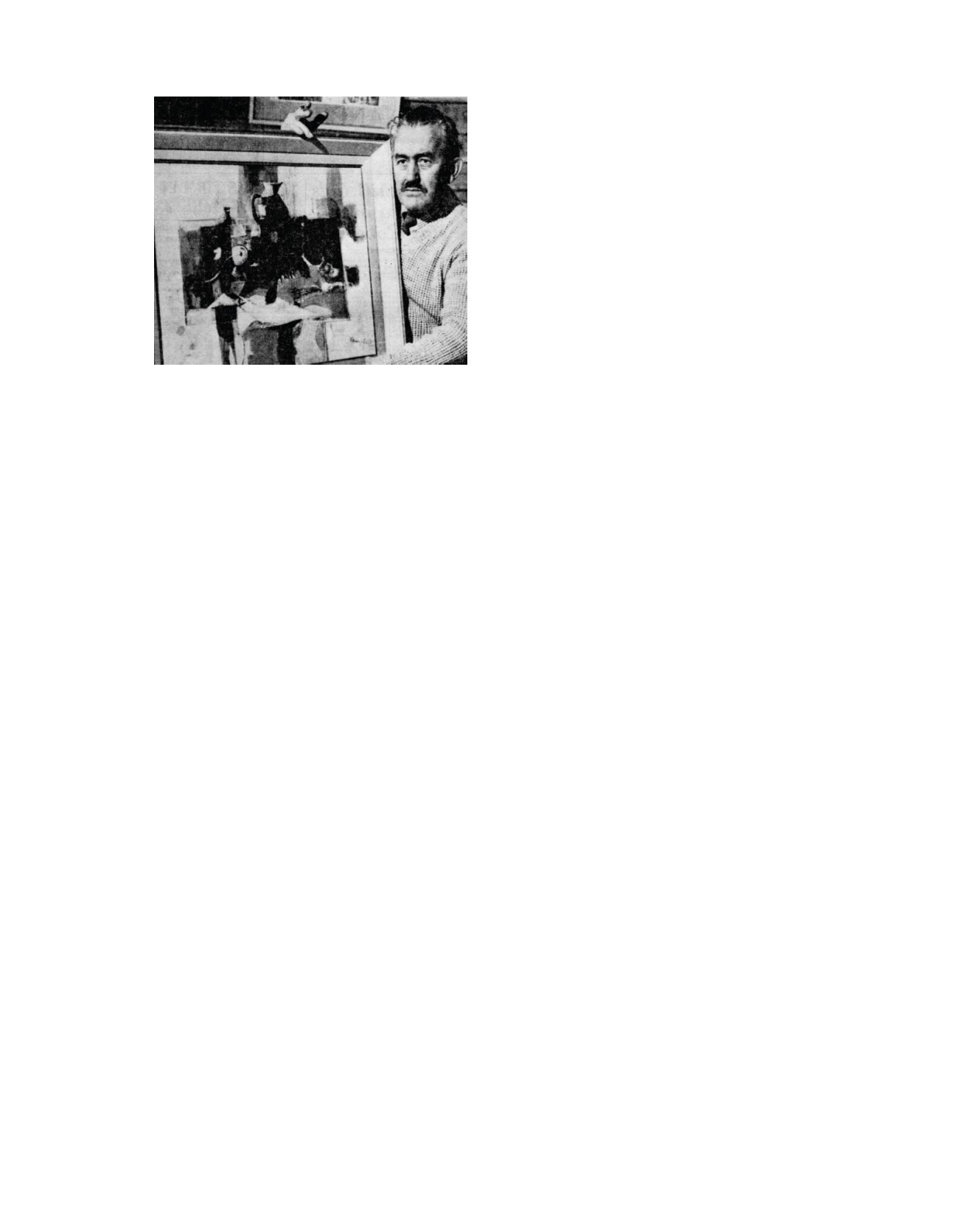
84 GEORGE CAMPBELL RHA RUA (1917-1979)Still Life with Crayfish (1972)
Oil on board, 51 x 61cm (20 X 24’’)
Signed together with original catalogue, 1972
Exhibited: ‘George Campbell’ exhibition at the Cork Art Society Gallery, Lavitts Quay, April 1972, Catalogue No.11;
‘George Campbell and the Belfast Boys’, Adam’s Loan Exhibition, Summer 2015, Catalogue No. 131
Literature: ‘George Campbell and the Belfast Boys’, by Karen Reihill, 2015, Illus p.131
Following the 1967 ROSC exhibition and increased prosperity in Ireland dramatic changes developed in the visual arts. Optical,
Conceptual and Pop Art emerged from a younger generation of artists. Campbell, who divided his time between Spain and Ireland
couldn’t understand the divergence in art practices in Dublin while his focus remained on people and on Ancient Ireland. At this time,
Campbell, a fluent Spanish speaker and a master of the flamenco guitar, was a popular figure in the community of Andalusia and had
held exhibitions in London and Malaga. Despite being labelled as out of date in Dublin in the late 1960s by some critics, demand for
his work led to solo exhibitions with Tom Caldwell in his galleries in Dublin and Belfast and a retrospective exhibition was held with
the Arts Council of Northern Ireland (ACNI) in Belfast in 1972.
Born in Arklow, the son of artist Gretta Bowen and brother of watercolourist and photographer, Arthur Campbell, George Campbell
worked in an assortment of jobs during the Belfast ‘
Blitz
’ before he decided to paint full time at the age of twenty-four. Self-taught, he
held his first solo exhibition with Victor Waddington in Dublin in 1946. Over the next twenty-five years, he divided his time between
Ireland and Spain exploring various subjects and mediums including designing stained glass windows for the Galway Cathedral in the
mid-1960s.
‘Still life with Crayfish
’ was exhibited at the Cork Arts Society in April 1972 and was chosen by the artist to feature with him in a
newspaper article. Reviewing Campbell’s exhibition at the ACNI in January 1972, Mercy Hunter remarked that Campbell was a ‘master
of still life painting, where his use of colour is excellent, his sense of pattern unfaltering, and where there is usually an element of
surprise in the composition to delight the eye.’ In this work the surprise and delight to the eye is a splash of red on a crayfish in the
centre of the composition. Campbell avoids formality and draws the viewer in by eliminating detail and concentrates instead on co-
lour balance and a pattern of shapes giving a strong sense of rhythm and design. The art critic who had labelled Campbell out of date
in the late 1960s positively reviewed his exhibition in Cork and remarked in
The Irish Times
that ‘
Still Life with Crayfish
was excellent’
adding ‘there are no gimmicks in the exhibition. It is an entirely sincere work - arrogant enough to know its own value and humble
enough to seek constantly for further knowledge.’ (April 21, 1972)
Karen Reihill, November, 2016
€ 8,000 - 12,000